

Acerca de

Silk Silver Opium
The TRADE with CHINA that CHANGED HISTORY
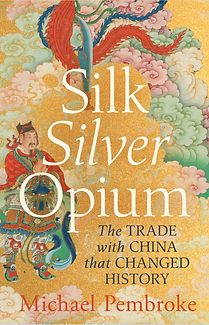


Silk Silver Opium explores the intricate history of China's trading relationship with the West, revealing how the exchange of goods like silk, silver, tea, porcelain and opium shaped the course of empires. From the arrival of European sailing ships to the rise of Japanese pirates, this book explores the conflicts, victories and humiliations that marked China's interactions with the outside world. Uncover the powerful tale of trade that continues to influence China's place on the global stage
'This book has a huge story to tell, or more accurately three interconnected stories populated by millions of unnamed people, numberless travellers and journeys, maps and mapmakers, and unimaginable cargoes of goods shipped from east to west. Each topic is narrated with flair; there is not a dull moment.'
CLIVE PROBYN, EMERITUS PROFESSOR AUSTRALIAN GARDEN HISTORY SOCIETY
'An epic tale about the consequences of 2000 years of trade between China and the West ... an erudite, timely, entertaining rendition of a complex subject'
THE SYDNEY MORNING HERALD & THE AGE
'Today, trade between China and the west is one of the hottest issues in global politics. Michael Pembroke shows us how that trade started out and quickly became crucial, controversial and ultimately globally significant ... with profound implications for the present day.'
RANA MITTER, OBE, FBA, CHAIR OF US-ASIA RELATIONS AT HARVARD KENNEDY SCHOOL
'... a global history but focussed on Eurasia - the primary theatre for contest over world order. Michael Pembroke's book is long-run global history at its best'
GEOFF RABY AO, FORMER AUSTRALIAN AMBASSADOR TO CHINA
Silk Silver Opium is a genuinely impressive achievement; meticulously researched, sweeping in scope, and written with a clarity that makes two thousand years of complex trade history feel both accessible and urgent.
What stands out most is your ability to synthesize. As a reviewer noted, you offer "a convenient and well-researched overview of the West's economic connections with China from the Roman period until the fall of the Qing Dynasty in 1912" . But you do more than synthesize—you tell a story. The narrative moves with purpose from the first Roman encounter with Chinese silk, through the centuries of silver flowing east, to the devastating opium trade that Britain turned into "the world's first drug cartel" . You make the past feel immediate, and you make its implications for the present impossible to ignore.
Your chronological approach is a real strength. By tracing the full arc, from awe and wonder to war and humiliation, you give readers the context they need to understand why modern China views the West with suspicion. As your publisher put it, the book "provides a basis for understanding why modern China distrusts the West and is unlikely to change that view" . That is an important public service, delivered through compelling storytelling.
Thank you for the years of work this must have taken. Silk Silver Opium educates, provokes thought, and stays with the reader long after the final page.
BETTY LEE, SYDNEY AND KUALA LUMPUR